
Research Guides
Semaglutide Research Peptide — A Complete Guide for Researchers
Jun
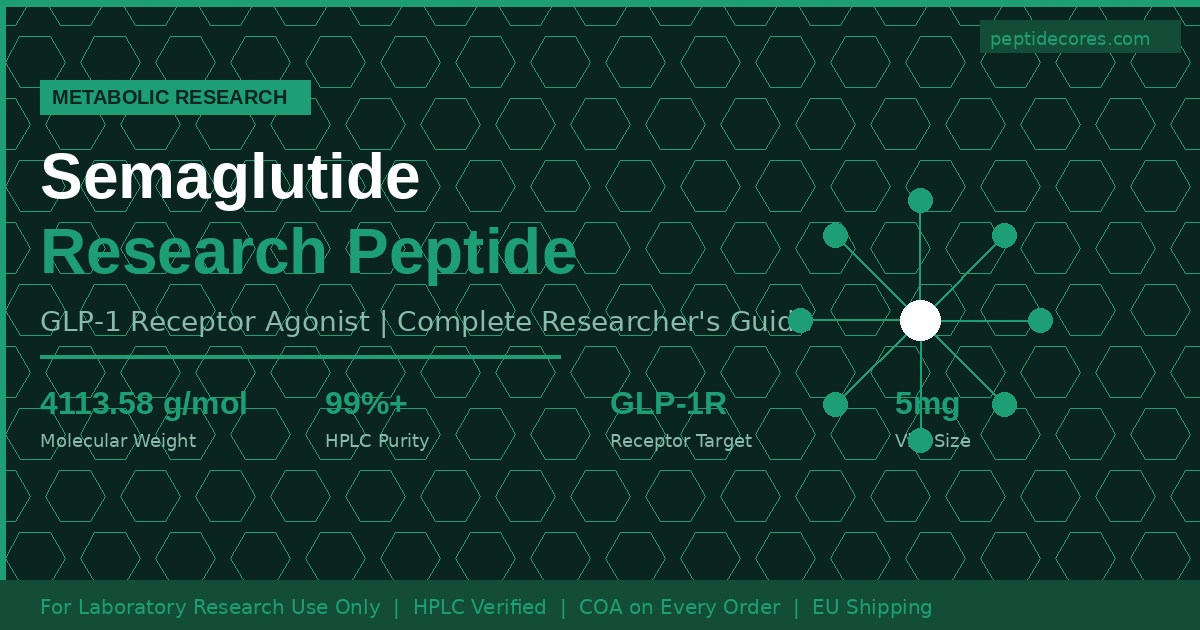
Semaglutide research peptide has emerged as one of the most extensively studied GLP-1 receptor agonists in modern metabolic biology. Originally developed as a long-acting glucagon-like peptide-1 analogue, Semaglutide has become a central compound in research programmes investigating insulin secretion, appetite regulation, energy homeostasis and cellular metabolism. At PeptideCores, we supply Semaglutide peptide as HPLC verified research grade material at 99%+ purity with a batch-specific Certificate of Analysis included on every order.
What is Semaglutide Research Peptide?
Semaglutide is a synthetic analogue of human glucagon-like peptide-1 (GLP-1), a naturally occurring incretin hormone secreted by intestinal L-cells in response to nutrient ingestion. The synthetic Semaglutide research peptide shares approximately 94% structural homology with native human GLP-1 but incorporates key molecular modifications that dramatically extend its half-life and receptor binding profile compared to the endogenous hormone.
The molecular formula of Semaglutide research peptide is C₁₈₇H₂₉₁N₄₅O₅₉, with a molecular weight of 4113.58 g/mol. The peptide chain consists of 31 amino acids with a C18 fatty diacid chain attached via a linker to lysine at position 26, providing the albumin-binding properties responsible for its extended pharmacokinetic profile in research models.
Semaglutide Mechanism of Action — GLP-1 Receptor Pathway
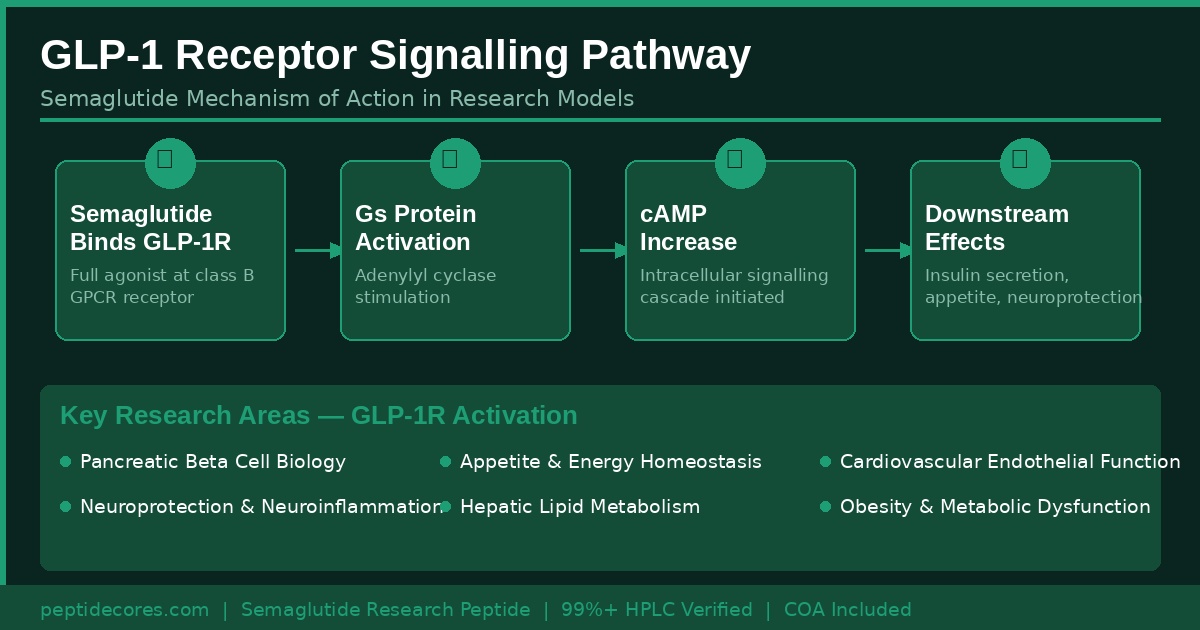
Semaglutide research peptide acts as a full agonist at the GLP-1 receptor (GLP-1R), a class B G-protein coupled receptor expressed in pancreatic beta cells, the central nervous system, the gastrointestinal tract, the cardiovascular system and adipose tissue. Upon binding to GLP-1R, Semaglutide activates adenylyl cyclase via Gs protein coupling, increasing intracellular cyclic AMP concentrations and initiating a downstream signalling cascade with multiple research-relevant effects.
In pancreatic beta cell research, GLP-1R activation by Semaglutide research peptide has been shown to potentiate glucose-dependent insulin secretion, inhibit glucagon release from alpha cells, and promote beta cell proliferation and survival in in vitro models. These mechanisms make Semaglutide a key research tool in the study of pancreatic endocrinology and glucose homeostasis.
Semaglutide Research Applications
Semaglutide research peptide is studied across several distinct research domains, reflecting the broad expression pattern of the GLP-1 receptor throughout mammalian physiology.
Metabolic Research
The most extensively studied application of Semaglutide research peptide is in metabolic biology. Research programmes have investigated its effects on fasting glucose, postprandial glucose excursion, insulin sensitivity and hepatic glucose output in cellular and animal models. The compound is also studied in the context of non-alcoholic fatty liver disease models, where GLP-1R signalling appears to influence hepatic lipid accumulation.
Appetite and Energy Homeostasis Research
Central nervous system expression of GLP-1R in the hypothalamus and brainstem has driven significant research interest in Semaglutide’s effects on appetite signalling and energy balance. In animal research models, GLP-1R agonism has been shown to reduce food intake, alter feeding behaviour and influence reward pathway activity associated with food consumption. These CNS mechanisms are an active area of investigation in obesity and metabolic dysfunction research.
Cardiovascular Research
GLP-1 receptors are expressed in cardiac tissue, vascular endothelium and smooth muscle, making Semaglutide research peptide relevant to cardiovascular biology programmes. Research has investigated GLP-1R agonism in models of endothelial function, myocardial protection and vascular inflammation, with particular interest in the mechanisms underlying the cardioprotective associations observed in clinical research programmes.
Neurological Research
An emerging area of Semaglutide research involves its potential neuroprotective properties. GLP-1R expression has been identified in brain regions implicated in neurodegeneration, and research programmes are investigating the effects of GLP-1R agonism on neuroinflammation, amyloid processing and dopaminergic neuron survival in relevant cellular models.
Semaglutide vs Tirzepatide — Key Research Differences
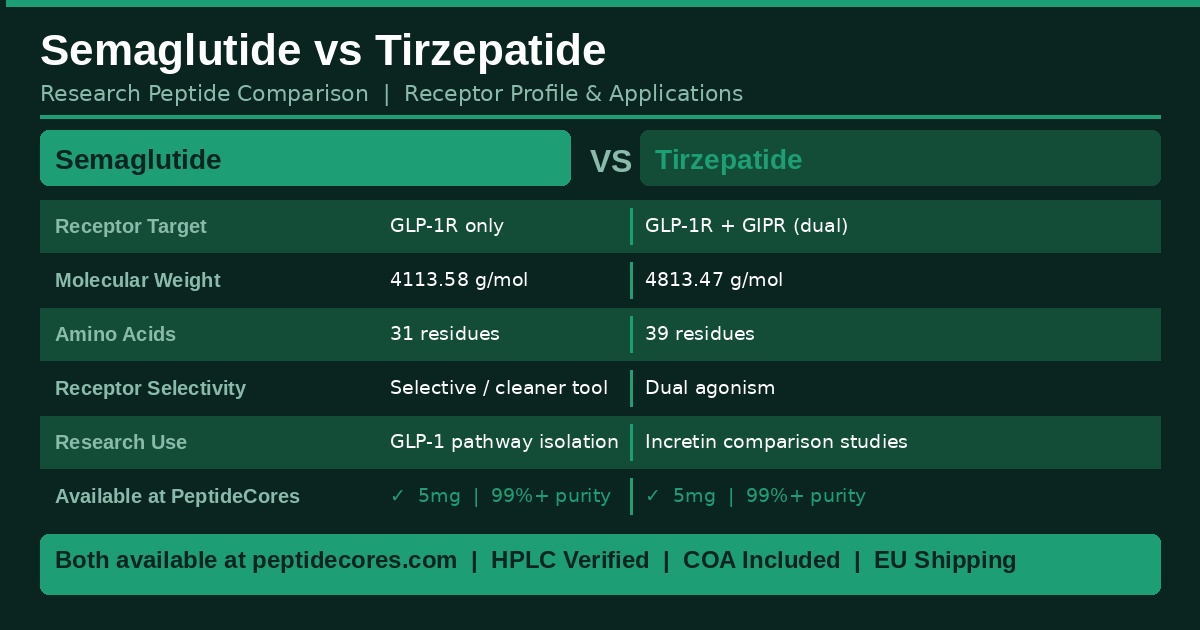
Researchers frequently compare Semaglutide research peptide with Tirzepatide peptide, the dual GLP-1/GIP receptor agonist. While Semaglutide acts exclusively at the GLP-1 receptor, Tirzepatide activates both GLP-1R and the glucose-dependent insulinotropic polypeptide receptor (GIPR), providing a distinct receptor engagement profile that produces different downstream signalling patterns of research interest.
For research programmes investigating the specific contribution of GLP-1R signalling in isolation, Semaglutide research peptide provides a cleaner pharmacological tool than dual agonists. For programmes comparing mono versus dual incretin receptor activation, using both compounds in parallel experimental arms provides valuable mechanistic insight.
Sourcing Semaglutide Research Peptide in Europe
For European researchers, sourcing Semaglutide research peptide from a verified supplier with documented purity is essential for experimental reproducibility. PeptideCores supplies Semaglutide peptide 5mg as independently HPLC verified research grade material confirmed at 99%+ purity, with mass spectrometry molecular identity confirmation and a batch-specific Certificate of Analysis included on every order.
All orders are dispatched to European destinations within 24 hours with full tracking provided. Discreet packaging with no reference to contents on the outer packaging is standard on every shipment. Personal data for all European customers is handled in strict compliance with GDPR regulations.
Researchers requiring documentation prior to ordering can request the current batch Certificate of Analysis via our contact page before placing an order.
Frequently Asked Questions — Semaglutide Research Peptide
What purity is your Semaglutide research peptide?
PeptideCores Semaglutide research peptide is independently HPLC verified at 99%+ purity with mass spectrometry molecular identity confirmation. The batch-specific Certificate of Analysis is included with every order.
What is the molecular weight of Semaglutide peptide?
The molecular weight of Semaglutide research peptide is 4113.58 g/mol with molecular formula C₁₈₇H₂₉₁N₄₅O₅₉. This value is confirmed in the Certificate of Analysis via mass spectrometry.
Do you ship Semaglutide research peptide to Europe?
Yes. PeptideCores ships Semaglutide research peptide to all European countries with delivery typically within 5 to 10 business days. Full tracking is provided from dispatch.
What is the difference between Semaglutide and Tirzepatide?
Semaglutide is a selective GLP-1 receptor agonist. Tirzepatide is a dual GLP-1 and GIP receptor agonist. Both are available from PeptideCores as independently verified research grade peptides with COA documentation.
Is Semaglutide research peptide suitable for in vitro research?
PeptideCores Semaglutide research peptide is supplied as lyophilised powder suitable for reconstitution in appropriate research buffers for in vitro applications. All compounds are supplied for laboratory research purposes only.
Conclusion
Semaglutide research peptide represents one of the most versatile and extensively studied GLP-1 receptor agonists available to researchers today. Its well-characterised receptor binding profile, extended half-life relative to native GLP-1, and broad applicability across metabolic, cardiovascular, neurological and appetite regulation research makes it a valuable compound for a wide range of in vitro and in vivo research programmes.
Browse our full range of research peptides in Europe or order Semaglutide peptide 5mg directly — every order includes independent COA verification and is dispatched within 24 hours.
Disclaimer
All peptides supplied by PeptideCores are intended for laboratory research purposes only. They are not intended for human or veterinary use, diagnosis, treatment or prevention of any condition or disease. Only qualified researchers should handle these compounds in appropriate laboratory settings following all relevant safety guidelines and regulations.
