
Research Guides
TB-500 vs BPC-157 — What’s the Difference?
Jun
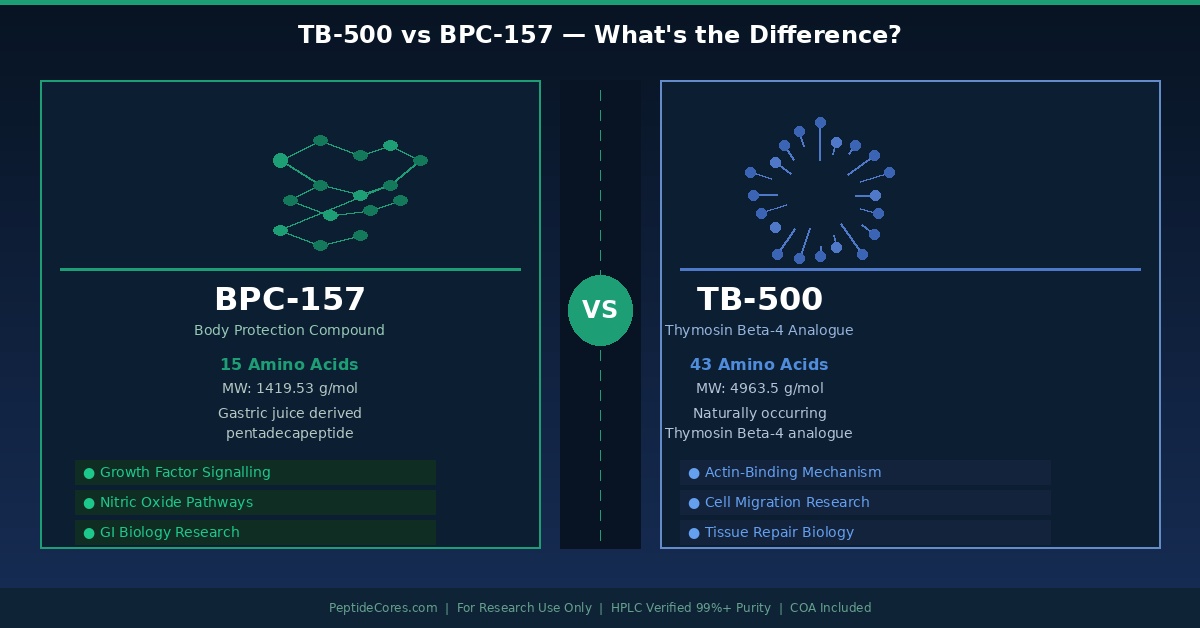
TB-500 vs BPC-157 — this is one of the most frequently asked questions among researchers studying synthetic peptides. Both compounds have attracted significant scientific interest and are among the most extensively studied research peptides available today. While TB-500 and BPC-157 are often studied together in combined research protocols, they are distinct compounds with different molecular structures, mechanisms of action and research applications. This complete guide examines the key differences between TB-500 vs BPC-157 to help researchers understand each compound individually.
What is BPC-157?
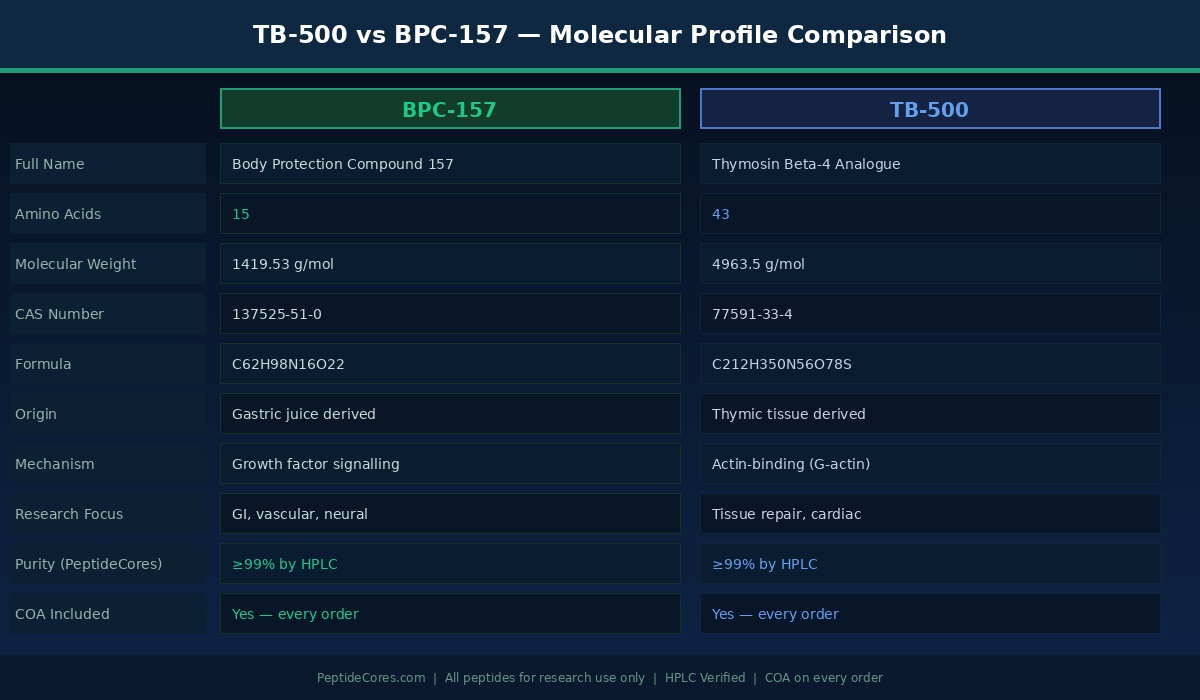
BPC-157, or Body Protection Compound 157, is a synthetic pentadecapeptide consisting of 15 amino acids. BPC-157 is a partial sequence of body protection compound derived from human gastric juice and was first identified in the gastrointestinal tract. The molecular formula of BPC-157 is C62H98N16O22 with a molecular weight of 1419.53 g/mol and CAS number 137525-51-0.
BPC-157 peptide has been the subject of numerous published research studies examining its molecular interactions with various cell types in controlled laboratory environments. As a pentadecapeptide, the 15 amino acid sequence of BPC-157 gives it unique molecular properties that have made it one of the most studied synthetic peptides in cellular biology research. BPC-157 is available from PeptideCores as a lyophilised powder at 5mg per vial with 99%+ HPLC verified purity and a Certificate of Analysis included with every order.
What is TB-500?
TB-500, also known as Thymosin Beta-4, is a synthetic version of a naturally occurring 43 amino acid peptide present in virtually all human and animal cells. The molecular formula of TB-500 is C212H350N56O78S with a molecular weight of 4963.5 g/mol and CAS number 77591-33-4. TB-500 is significantly larger than BPC-157 in terms of molecular weight and amino acid count — 43 amino acids compared to 15 in BPC-157.
Thymosin Beta-4, the naturally occurring version of TB-500 peptide, was first identified in thymic tissue and was found to be one of the most abundant peptides in mammalian cells. Research involving TB-500 peptide has been published across multiple peer reviewed journals covering cellular biology, wound healing research and tissue repair mechanisms. TB-500 is available from PeptideCores as a lyophilised powder at 5mg per vial with 99%+ HPLC verified purity.
TB-500 vs BPC-157 — Molecular Structure Comparison
When comparing TB-500 vs BPC-157 at the molecular level, several key differences emerge that are important for researchers to understand.
BPC-157 is a pentadecapeptide — a chain of exactly 15 amino acids. Its sequence is Gly-Glu-Pro-Pro-Pro-Gly-Lys-Pro-Ala-Asp-Asp-Ala-Gly-Leu-Val. The relatively small size of BPC-157 gives it good stability in aqueous environments and makes it suitable for a wide range of in-vitro research applications. BPC-157 is a synthetic compound with no direct naturally occurring equivalent — it represents a partial sequence found within a larger naturally occurring protein.
TB-500 is considerably larger, consisting of 43 amino acids. The active region of TB-500 peptide responsible for its studied biological activity in research models is the actin-binding domain containing the sequence LKKTETQ. This actin-binding capacity of TB-500 is what distinguishes it mechanistically from BPC-157 in research settings. TB-500 is a synthetic analogue of naturally occurring Thymosin Beta-4, sharing its core amino acid sequence.
TB-500 vs BPC-157 — Mechanisms of Action in Research Models
Understanding the different mechanisms of action is central to the TB-500 vs BPC-157 comparison from a research perspective.
BPC-157 peptide has been studied for its interactions with multiple molecular targets in research models. Studies have examined BPC-157 peptides effects on nitric oxide signalling pathways, vascular endothelial growth factor expression and multiple growth factor receptor systems in controlled laboratory environments. The gastric origin of BPC-157 has also led researchers to study its interactions with gastrointestinal cell types and mucosal protection mechanisms in research models.
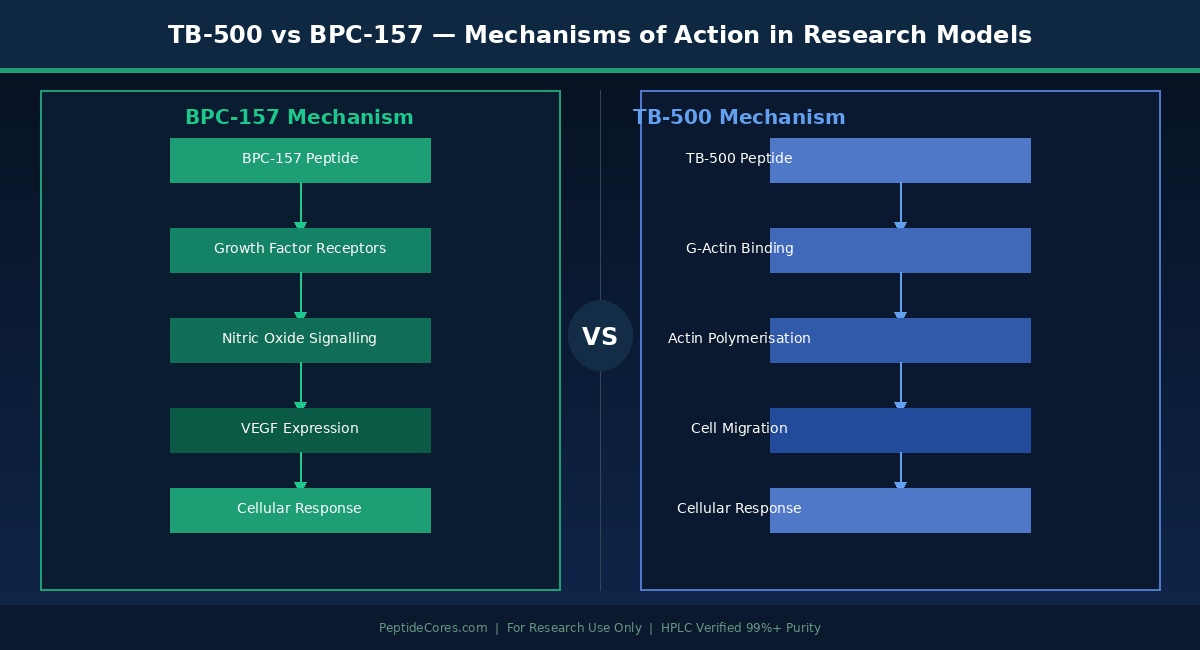
TB-500 peptide operates through a distinct mechanism centred on its interaction with G-actin, the monomeric form of actin that is fundamental to cellular cytoskeletal dynamics. By sequestering G-actin, TB-500 peptide influences actin polymerisation dynamics and downstream cellular processes including cell migration and proliferation in research models. This actin-binding mechanism of TB-500 is entirely different from the mechanisms studied for BPC-157 and represents one of the fundamental differences between the two compounds in research settings.
TB-500 vs BPC-157 — Research Applications
The TB-500 vs BPC-157 comparison in terms of research applications reveals both overlap and distinct areas of scientific interest.
BPC-157 peptide research has been conducted across several areas of cellular biology. Studies have examined BPC-157 in the context of gastrointestinal biology given its origins in gastric juice. Research has also examined BPC-157 peptides interactions with tendon and ligament cell types, vascular biology and neurological tissue in controlled laboratory environments. The multi-system research interest in BPC-157 reflects its complex interactions with multiple molecular targets.
TB-500 peptide research has focused substantially on tissue repair and regeneration mechanisms given its role in actin dynamics and cell migration. Studies have examined TB-500 peptides effects on wound healing models, cardiac tissue research, hair follicle biology and corneal tissue in laboratory environments. The naturally occurring nature of Thymosin Beta-4, from which TB-500 is derived, has provided researchers with extensive background literature on its biological roles across multiple tissue types.
Both BPC-157 and TB-500 have been studied in the context of musculoskeletal tissue research, which is one reason why the two compounds are frequently examined together in combined research protocols. Researchers studying tendon, ligament and muscle cell biology often include both BPC-157 and TB-500 in their experimental designs to examine the complementary aspects of both compounds.
TB-500 vs BPC-157 — Combined Research Protocols
One of the most significant aspects of the TB-500 vs BPC-157 research landscape is the frequency with which the two compounds are studied together. The rationale for combined TB-500 and BPC-157 research protocols lies in their distinct but potentially complementary mechanisms of action.
Since TB-500 peptide operates primarily through actin-binding and cell migration pathways while BPC-157 peptide interacts with growth factor signalling and nitric oxide pathways, researchers have hypothesised that the two compounds may address different aspects of cellular repair and regeneration in research models. Combined BPC-157 and TB-500 studies allow researchers to examine whether simultaneous activation of these distinct pathways produces additive or synergistic effects in controlled laboratory environments.
Both BPC-157 peptide and TB-500 peptide are available individually from PeptideCores for research purposes. Each compound is supplied as a lyophilised powder with 99%+ HPLC verified purity and an independent Certificate of Analysis confirming molecular identity and purity for every batch dispatched.
TB-500 vs BPC-157 — Stability and Storage
From a practical research perspective, the TB-500 vs BPC-157 comparison in terms of stability and storage is important for laboratory planning.
BPC-157 peptide in lyophilised form should be stored at minus 20 degrees Celsius in a dry environment away from direct light and moisture. Under these recommended storage conditions, BPC-157 remains stable for up to 24 months from the date of manufacture. Once reconstituted, BPC-157 peptide solution should be stored at 4 degrees Celsius and used within appropriate research timelines.
TB-500 peptide in lyophilised form has similar storage requirements — stored at minus 20 degrees Celsius away from direct light and moisture, TB-500 remains stable for up to 24 months. The larger molecular size of TB-500 means researchers should take particular care during reconstitution to ensure complete dissolution without excessive agitation that could affect peptide integrity.
Both BPC-157 and TB-500 supplied by PeptideCores include full storage instructions on the Certificate of Analysis documentation provided with each order.
TB-500 vs BPC-157 — Purity and Quality Standards
When evaluating TB-500 vs BPC-157 from a quality assurance perspective, the standards applied to each compound should be equivalent regardless of which peptide is being studied.
Both TB-500 peptide and BPC-157 peptide supplied by PeptideCores are verified at 99%+ purity by High Performance Liquid Chromatography before dispatch. HPLC testing is the gold standard method for verifying peptide purity, separating compounds based on their molecular properties and confirming that the target peptide constitutes at least 99% of the supplied compound with no more than 1% consisting of impurities.
Mass spectrometry is used alongside HPLC to confirm the molecular identity and molecular weight of both TB-500 and BPC-157 in every batch. For TB-500 specifically, the larger molecular size means mass spectrometry confirmation is particularly important for verifying the full 43 amino acid sequence integrity. A full Certificate of Analysis confirming these quality parameters is included with every order of both BPC-157 and TB-500 from PeptideCores.
TB-500 vs BPC-157 — Summary of Key Differences
To summarise the key differences in the TB-500 vs BPC-157 comparison for researchers:
Molecular size: BPC-157 consists of 15 amino acids with a molecular weight of 1419.53 g/mol. TB-500 consists of 43 amino acids with a molecular weight of 4963.5 g/mol — making TB-500 approximately 3.5 times larger than BPC-157.
Origin: BPC-157 is a synthetic peptide representing a partial sequence found in human gastric juice with no direct naturally occurring equivalent. TB-500 is a synthetic analogue of Thymosin Beta-4, a naturally occurring peptide found throughout the human body.
Primary mechanism: TB-500 peptide research has focused on actin-binding and cell migration mechanisms. BPC-157 peptide research has examined interactions with growth factor signalling, nitric oxide pathways and vascular biology.
Research focus areas: Both compounds have been studied in musculoskeletal tissue research contexts. BPC-157 has additional research interest in gastrointestinal and neurological contexts. TB-500 has additional research interest in cardiac tissue and wound healing contexts.
Combined research: TB-500 and BPC-157 are frequently studied together due to their distinct but potentially complementary mechanisms making combined protocols scientifically informative.
Where to Buy TB-500 and BPC-157 Research Peptides
When purchasing TB-500 and BPC-157 for research purposes it is essential to choose a supplier that prioritises purity and transparency. PeptideCores supplies both TB-500 peptide and BPC-157 peptide as research grade lyophilised powders with the following quality guarantees on every order.
Independent third-party HPLC testing confirms purity at 99%+ for both TB-500 and BPC-157. A Certificate of Analysis confirming purity, molecular weight and identity is included with every order of TB-500 and BPC-157 from PeptideCores. Secure SSL encrypted ordering protects your personal and payment information. Discreet worldwide shipping ensures your TB-500 and BPC-157 research compounds arrive safely and promptly.
Browse our full range of research peptides including BPC-157 peptide 5mg, TB-500 peptide 5mg, GHK-Cu peptide 50mg, Ipamorelin peptide 5mg and CJC-1295 peptide 5mg.
Conclusion
The TB-500 vs BPC-157 comparison reveals two distinct research peptides with different molecular structures, sizes and mechanisms of action that have both attracted significant scientific interest. BPC-157 is a 15 amino acid synthetic pentadecapeptide studying interactions with growth factor signalling and nitric oxide pathways. TB-500 is a 43 amino acid synthetic analogue of Thymosin Beta-4 studying actin-binding and cell migration mechanisms. While the two compounds differ significantly at the molecular level, their complementary research applications mean they are frequently studied together in combined protocols.
PeptideCores supplies both TB-500 peptide and BPC-157 peptide for research purposes with 99%+ HPLC verified purity and a Certificate of Analysis included on every order.
Disclaimer
All peptides supplied by PeptideCores including TB-500 and BPC-157 are intended for laboratory research purposes only. They are not intended for human or veterinary use, diagnosis, treatment or prevention of any condition or disease. Only qualified researchers should handle these compounds in appropriate laboratory settings following all relevant safety guidelines and regulations.
